Shipping & Delivery
Delivery across Malta & Gozo: €6 flat rate, or free on orders over €40. Orders usually arrive within 1–3 working days.
Collection: prefer to pick up? Collect your order from our St Paul’s Bay collection point by appointment, Monday to Saturday, 9:00–19:00.
Payment: pay securely online by card, Apple Pay, Google Pay or Klarna at checkout.
Returns: unopened, sealed products can be returned within 14 days. See our returns & refunds policy.
Questions? Call us on +356 9955 8858 or email info@sattvahealthshop.com.
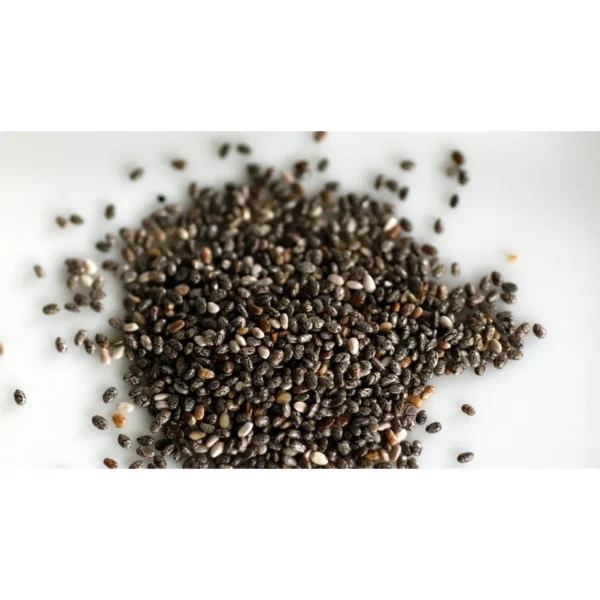
Chia seeds earn their superfood reputation the honest way: by composition. These tiny seeds — from Salvia hispanica, a plant in the mint family cultivated since Aztec times — are naturally rich in omega-3 fatty acids (as plant-based ALA), high in fibre, and a source of complete plant protein, along with minerals like calcium and magnesium. Sattva Superfoods packs them plain and unprocessed in a 125 g pouch: no coating, no roasting, nothing added.
Why such a small seed gets so much attention
Gram for gram, chia is one of the most nutrient-dense foods in the pantry. Its standout trick is fibre — a large share of it soluble, which is why chia soaked in liquid forms its signature gel. That gel is the basis of chia pudding, the egg-free binder in vegan baking, and the reason a spoonful in a smoothie makes breakfast feel more substantial. The seeds are naturally gluten-free and entirely plant-based.
Ten minutes to learn, endless uses
- Chia pudding — 3 tablespoons of seeds to 250 ml of milk or plant milk, stir twice in the first ten minutes, refrigerate a few hours or overnight; top with fruit
- Smoothies — a tablespoon blended in adds body, fibre and omega-3s without changing the taste
- Egg substitute — 1 tablespoon chia + 3 tablespoons water, rest ten minutes, replaces one egg in most bakes
- Breakfast bowls — stir into yoghurt, oatmeal or overnight oats
- Crunch and texture — sprinkle dry over salads, soups and avocado toast
- Thickener — blend into dressings, jams and sauces instead of starch
The nutrition, plainly stated
Chia seeds are high in fibre, a source of plant protein containing all nine essential amino acids, and one of the richest plant sources of the omega-3 fatty acid ALA. They also contribute minerals — notably calcium, magnesium and phosphorus. The flavour is mild and neutral, which is precisely their virtue: they upgrade what you already eat rather than demanding new recipes.
A practical note on using them
Chia absorbs many times its weight in liquid, so when adding seeds to drinks or porridge, give them a few minutes and a stir — and drink water normally through the day, as with any high-fibre food. Start with a teaspoon or two daily if fibre-rich foods are new to your routine, and build up. One to two tablespoons a day is the amount most people settle on.
Storage
Chia’s natural antioxidants make it far more shelf-stable than most seeds — no refrigeration needed. Keep the pouch sealed in a cool, dry cupboard and it stays fresh well beyond most pantry staples.
Frequently asked questions
Black or white chia? These are the classic dark seeds; nutritionally the colours are near-identical.
Do I need to grind them? No — soaked or well-chewed whole seeds do the job; grinding is optional for smoother textures.
Are they keto-friendly? Their carbohydrates are overwhelmingly fibre, which is why chia appears in so many keto recipes.
From Aztec staple to Maltese pantry
Chia was valuable enough in Aztec Mexico to be paid as tribute — runners reputedly carried pouches of it on long messenger routes. The seed then spent centuries in relative obscurity before nutrition science rediscovered what those runners knew: a compact food that travels well, keeps well and quietly upgrades whatever it’s added to. Our 125 g pouch is the right size to find out where it fits in your kitchen — most households discover their chia habit lands somewhere between the morning smoothie and the Sunday batch of puddings, and graduate to keeping it next to the oats permanently.
Delivery in Malta & Gozo
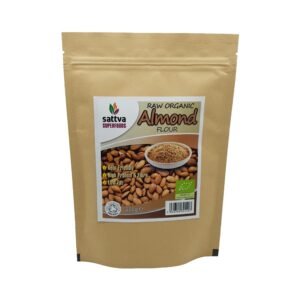
€6 delivery, free over €40 — chia seeds slot neatly into any pantry order alongside our organic almond flour and other Sattva Superfoods staples. Collection available at St Paul’s Bay.



Reviews
There are no reviews yet.