

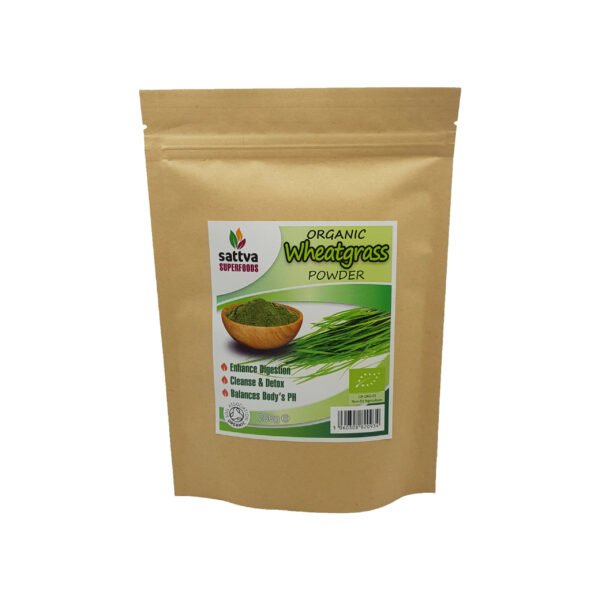
Wheat grass powder is the young wheat plant (Triticum aestivum) harvested green — cut months before any grain forms, when the plant is still all leaf, chlorophyll and stored spring energy — then dried and milled fine. Sattva Superfoods’ version is certified organic, field-grown in the EU for three months or more before harvest, and packed in the UK in a 250 g resealable pouch.
Grass, not grain
The distinction matters more here than anywhere else in the superfood aisle: wheat grass is the leaf of the wheat plant, harvested long before the gluten-bearing grain develops. The label declares this product free of wheat and gluten along with the other major allergens — coeliac and gluten-sensitive households should, as always, let the printed pack be the final word, but the green leaf and the golden grain are genuinely different foods.
What’s in the green
Wheat grass earned its juice-bar reputation on concentration: the young leaf is dense with chlorophyll — the pigment that makes it taste like a freshly cut lawn smells — alongside a naturally occurring spread of amino acids, vitamins and minerals preserved by careful drying. Field-grown grass, given a full season rather than a tray on a windowsill, develops more substance to concentrate. This is the whole dried leaf’s nutrition in spoonable form, stated plainly and without the miracle arithmetic the category is prone to.
How to take it
- The classic shot — a teaspoon whisked into a small glass of water or apple juice, drunk quickly and chased with pride
- Green smoothies — banana, pineapple or mango cover the grassiness completely; spinach-and-apple blends welcome it
- Juices — stirred into fresh citrus or vegetable juice, the traditional wheatgrass-bar pairing
- Morning rotation — many users alternate it with barley grass and chlorella through the week for variety
An honest word on flavour
Wheat grass tastes green — sweetly grassy, faintly bitter at the finish, unmistakably itself. Nobody drinks it for dessert. Start with half a teaspoon in something fruity and work upward; within a fortnight most people stop noticing, and long-term devotees claim to enjoy it, a claim we pass along without adjudicating.
Frequently asked questions
Powder vs fresh juice? The powder is the dried field-grown leaf — shelf-stable, consistent and available year-round, no juicer or windowsill farm required.
How much per serving? A teaspoon is the customary measure; the 250 g pouch holds months of daily servings.
Storage? Reseal firmly and keep cool, dry and out of direct sun — chlorophyll fades in light like any green thing.
Field-grown, and why it matters
Much commercial wheat grass is tray-grown indoors in ten days — quick, pale and thin. This grass grows outdoors in EU fields for three months or more, through real weather and real soil, before harvest. The slow season is the difference you can see in the depth of the green: a longer-rooted plant simply has more time to accumulate the minerals and chlorophyll the powder is bought for. After cutting, the grass is dried and milled — the whole leaf, not a juice extract — so the powder keeps the plant’s fibre along with its nutrients.
Building the morning green routine
The practical way to make any green powder stick is to attach it to an existing habit rather than invent a new one. Blend it into the smoothie you already make; stir it into the juice you already pour. A teaspoon a day is a sustainable pace the pouch supports for months, and pairing it on alternate days with barley grass or chlorella keeps the palate interested — each green has its own character, and rotation is how the juice-bar generation actually drinks them. Mixed into a morning glass with lemon and apple juice, wheat grass tastes considerably better than its reputation and takes under a minute of effort.
Delivery in Malta & Gozo
€6 delivery, free over €40 across Malta and Gozo, or collection from St Paul’s Bay.

Reviews
There are no reviews yet.