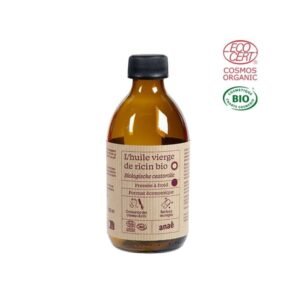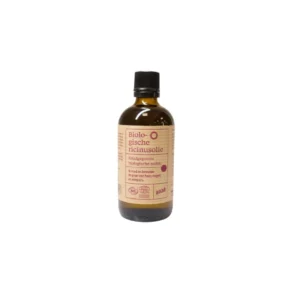

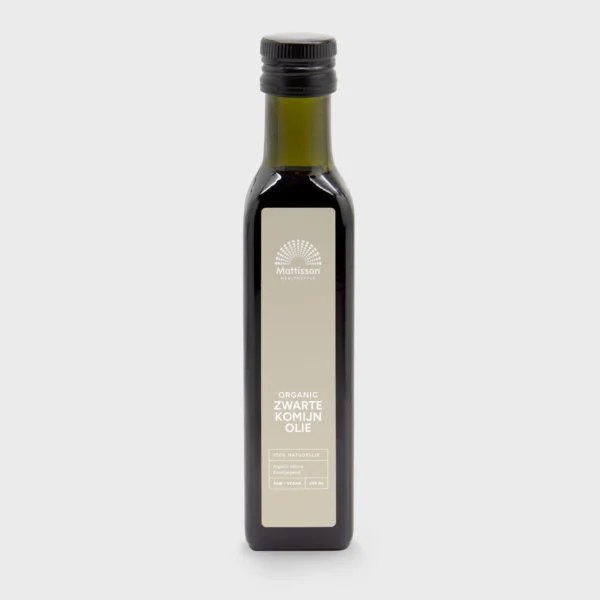
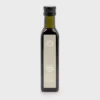
Few bottles in the pantry carry as much history as black seed oil. Pressed from the seeds of Nigella sativa — black cumin, the tiny jet-black seed scattered across flatbreads from Cairo to Mumbai — it has been valued continuously across Middle Eastern, North African and South Asian traditions for well over a thousand years. Mattisson’s is the kind the tradition would recognise: organic, virgin, first-pressing, cold-pressed from unheated ripe seeds in the Netherlands, 250 ml.
What cold-pressed actually buys you
Heat is the cheap way to squeeze more oil from a seed, and the expensive habit of destroying what made the oil interesting. Cold pressing keeps the temperature down so the oil retains the nutrients, flavour and aroma of the ripe seed — which, in black seed’s case, means a robust, peppery, unmistakably herbal character. “Virgin, first pressing” means this is the first and only extraction: no solvents, no refining, no second passes. The ingredient list is one line: 100% organic cold-pressed black cumin seed oil.
How to use black seed oil
- The traditional teaspoon — taken neat, or chased with honey or juice; the flavour is assertive, and regulars come to like exactly that
- Finishing oil — drizzled over hummus, labneh, salads, roast vegetables or soups, anywhere a peppery bite belongs
- Dressings — blended with lemon and olive oil, it turns a plain vinaigrette Middle Eastern
- Not for frying — heat undoes the cold-pressing’s work; add it after cooking
A seed with serious credentials
Nigella sativa’s little black seeds have seasoned bread and pickles across half the world for millennia, and the oil holds a permanent place in the traditional practices of those same regions. Modern interest has followed the old reputation energetically — but the honest core of the product remains what it always was: a distinctive, food-grade seed oil with an ancient CV, taken by the spoon or poured over the plate.
Storage and sensible use
Shake before use, keep the bottle cool and dark, and cap it well — cold-pressed oils repay a little care. As a concentrated food, the usual counsel applies: if you are pregnant, breastfeeding or on medication, have a word with your doctor before making it a daily habit, and keep it out of children’s reach.
Frequently asked questions
What does it taste like? Peppery, herbal and bold — closer to oregano-meets-cumin than to any neutral oil. Honey is the classic diplomatic escort.
Is black seed the same as black sesame or onion seed? No — Nigella sativa is its own plant; the lookalike seeds are unrelated.
How long does a bottle last? At a teaspoon a day, roughly seven weeks — well within its happy lifespan if stored cool and dark.
The pantry test
A good rule for judging any traditional oil: would the cuisine that made it famous recognise this bottle? Here the answer is yes on every line — organic seeds, a single cold pressing, no refining, and the peppery bite that tells you nothing was smoothed away in processing. Treat it as both condiment and ritual: the teaspoon crowd and the drizzle-it-on-everything crowd are buying the same bottle for different reasons, and both come back for the same reason — it is simply the real thing.
Why is it made in the Netherlands? The pressing happens where cold-press expertise and organic certification are easiest to guarantee — the seeds keep their origin character; the process keeps its standards.
Can I use it on skin or hair? The oil has a long history of external use in its home traditions — patch-test first, as with any potent plant oil, and keep the kitchen bottle and the bathroom bottle separate for simple hygiene.
Delivery in Malta & Gozo
€6 delivery, free over €40 across Malta and Gozo, or collect from our St Paul’s Bay point.