

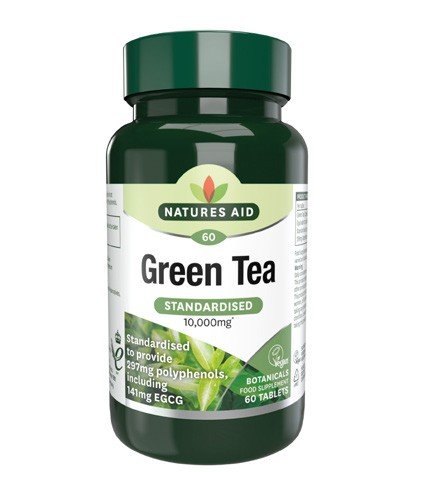
Natures aid green tea standardised presses the world’s most studied leaf at serious equivalence: 10,000mg of green tea per tablet, standardised for the catechins – EGCG above all – that made Camellia sinensis the most published plant in the nutrition literature. The teapot’s chemistry at tablet consistency, kept at the working register.
What green tea standardised concentrates
The unfermented leaf’s polyphenols are the extract’s whole story: the catechin family led by epigallocatechin gallate – the EGCG of ten thousand papers – preserved by the non-oxidising processing that separates green tea from black. The tablet’s equivalence arithmetic answers the custom’s practical problem: the literature’s figures run to many daily cups, and the standardised press delivers the fraction without the caffeine census.
- 10,000mg green tea leaf equivalence per tablet
- Standardised catechins – the EGCG fraction stated
- The literature’s leaf without the twelve-cup arithmetic
- 90 tablets; Lancashire GMP press
- The teapot’s chemistry at tablet consistency
The leaf’s modern constituencies
The extract’s audiences arrive from the literature’s several doors: the metabolism-curious whose papers seat the catechins beside the era’s weight-management conversations, the polyphenol generalists running the Mediterranean pattern’s concentrated extensions, and the antioxidant shelf’s readers – the catechins’ cell-protection territory being the leaf’s laboratory fame. The register holds honest: the literature is vast and its human chapters still arguing, the label’s voice staying traditional.
The teapot keeps its senior lane without argument: the brewed leaf remains the custom’s heart – ritual, hydration and chemistry together – with the tablet underwriting the figures the day’s actual pots miss.
The Lancashire press
Equivalence stated, catechins standardised, price working – documented on the official Natures Aid site with GMP constancy since 1981. Against the boutique EGCG formulas at multiples, the plain equivalence press keeps the leaf’s chemistry accessible.
Practical rhythm
One tablet daily with food – the extract tradition’s mealtime etiquette, the concentrated catechins preferring company – judged across the quarter the polyphenol customs use. The morning-to-midday slot suits the leaf’s residual caffeine census; the evening belongs to gentler shelves. The liver-conscious note of the concentrated-catechin literature stands: label doses respected, mealtime taken, and the doctor’s word where liver history runs.
The pairing customs complete the shelf: the matcha kitchen’s parallel lane, the antioxidant colleagues’ recycling partnerships, and the walking custom that every metabolism paper’s fine print still names first.
The matcha comparison completes the leaf’s format map: the stone-ground whole-leaf powder delivers the census with its caffeine and ceremony intact – the kitchen’s premium lane – while green tea standardised concentrates the catechin fraction at tablet consistency and pocket arithmetic. The two formats serve different mornings; the ceremonial bowl and the measured press sharing one plant’s chemistry.
The oxidation lesson earns its closing footnote: black tea’s fermentation converts the catechins this extract exists to preserve – the same leaf, chemically rerouted – making green tea standardised the only tablet route to the unfermented fraction the literature actually studied. The teapot’s greenest chemistry, held green: the leaf as the papers read it.
Delivered across Malta and Gozo
Order green tea standardised from Sattva Health Shop and we deliver island-wide from St Paul’s Bay, free over €40. The botanical shelf lives in our supplements range.
The library’s leaf, pressed: green tea standardised – ten grams of the world’s most studied plant, one measured tablet.


Reviews
There are no reviews yet.