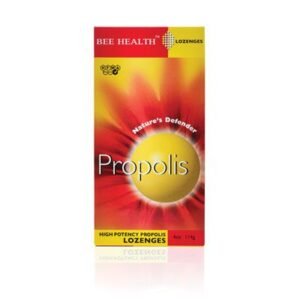


Propolis Winter Mixture is Bee Health’s cold-months classic: the hive’s famous resin in a spoonable liquid, blended with honey powder, a squeeze of lemon oil and a measure of vitamin C — which contributes to the normal function of the immune system — in the format grandparents would recognise and modern labels can verify.
Propolis, the hive’s own material
Honey bees gather propolis from buds and resinous bark, blending tree resin, essential oils, waxes and bioflavonoids into the substance they use to seal and protect the hive itself. It stands among nature’s richest sources of bioflavonoids, and centuries of European winter tradition adopted it accordingly. The antioxidant effects of bioflavonoids may help to maintain a healthy immune system — the closest thing to a claim we’ll make, and the one the label itself carries.
What’s in the bottle
Propolis extract with honey powder, vegetable glycerine, lemon oil for brightness, vitamin C (ascorbic acid), and the supporting cast — citric acid and sodium citrate for stability, xanthan gum for texture, potassium sorbate as preservative. Bee Health guarantees the bioflavonoids are naturally occurring with nothing synthetic added, and batch-tests for potency and quality — the standard that made them the world’s best-selling propolis brand.
How to take it
Shake thoroughly. One to three teaspoons (5 ml), up to three times daily, preferably with a meal — straight from the spoon, or stirred into warm (not boiling) water with honey as the season’s ritual demands. Do not exceed the stated dose. Not recommended for anyone allergic to tree resin; if pregnant, breastfeeding or under medical supervision, consult a professional first, and discontinue if any adverse reaction occurs. Store cool and dry, out of children’s reach; don’t use if the tamper seal is broken. Food supplements are not a substitute for a varied, balanced diet.
The winter drawer, done properly
Every Maltese household keeps a winter drawer — this bottle belongs in it beside the lemons and the good honey, ready before the first grigalata rather than after. It pairs naturally with the rest of the Bee Health shelf: the throat spray for out of the house, lozenges for the desk, and this mixture as the home base.
Frequently asked questions
What does it taste like? Honey-lemon warmth over propolis’s resinous depth — a flavour with grandmother’s-kitchen credentials.
Children? Pharmacist first, as with all bee products for the young.
Can I put it in tea? Warm tea, yes — just not scalding; treat it like good honey.
Why “winter mixture” earns the name
The format is the tradition: a spoonable amber liquid built for the months when the kettle never cools. Its design choices all point the same direction — honey powder because winter medicine has tasted of honey since antiquity, lemon oil because citrus is the season’s own flavour, vitamin C because the modern label can carry an authorised immune-function claim where folk memory once sufficed, and glycerine from vegetable sources keeping the pour easy on cold mornings. It is deliberately a whole-household bottle: the evening spoon, the warm-drink stir-in, the traveller’s pre-flight ritual. Three teaspoons three times daily is the ceiling, not the target — most households settle into a single daily spoon through the season and let the bottle pace itself.
How long does a bottle last? At a daily teaspoon, a full season; at family usage in a sniffly January, plan on a second bottle.
Vegetarian-friendly? The glycerine is vegetable-sourced and the formula is hive-and-plant based — strict vegans, note that all propolis is by definition a bee product.
Delivery in Malta & Gozo
€6 delivery, free over €40 across Malta and Gozo, or collection from St Paul’s Bay.