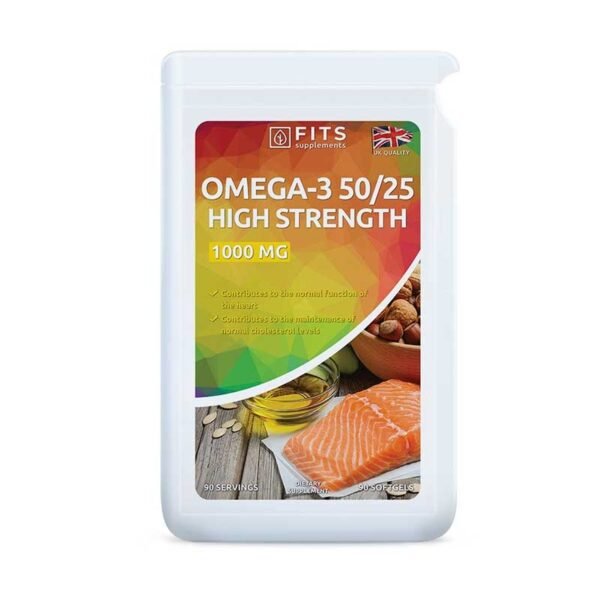
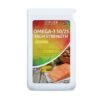
Fits – Omega-3 High Strength EPA 500 mg DHA 250 mg 90 softgels
Original price was: €21.95.€18.66Current price is: €18.66.
High-strength fish oil softgels providing 500 mg EPA and 250 mg DHA per serving.
- EPA and DHA contribute to normal heart function
- Purified, high-strength omega-3
- 90 softgels per pack
9 in stock
- Fast Malta & Gozo delivery — free over €40
- 14-day returns on unopened items
- Secure SSL checkout
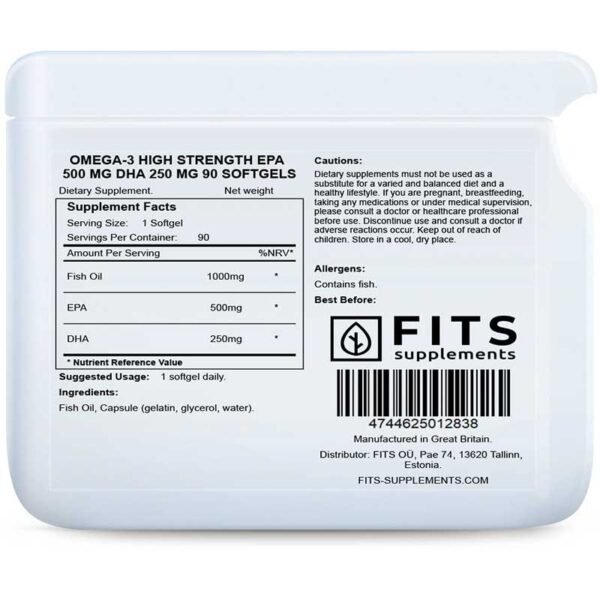
Omega-3 high strength means something specific on this label: each single Fits softgel carries 1000 mg of purified fish oil delivering 500 mg of EPA and 250 mg of DHA — concentrations that let one capsule a day do what budget fish oils need three for. Ninety softgels per pack; a full quarter of the year in one purchase.
The claims this dose actually earns
EU regulation only permits omega-3 claims when doses justify them, and this formula clears the bars: EPA and DHA contribute to the normal function of the heart (the effect obtained with 250 mg of EPA and DHA daily — one softgel triples it), and DHA contributes to the maintenance of normal brain function and normal vision (obtained with 250 mg of DHA daily — exactly what one softgel supplies). No wishful labels; the arithmetic simply works.
Why concentration matters in fish oil
The fish-oil aisle’s dirty secret is dilution: standard 1000 mg capsules often carry only 300 mg of actual EPA+DHA, leaving users under-dosed or swallowing handfuls. A high-strength softgel fixes the ratio — 750 mg of the omega-3s that matter per 1000 mg of oil — which is better for compliance, better per euro of actual EPA+DHA, and kinder to anyone who dislikes swallowing capsules.
What’s in it
Purified fish oil in a gelatine softgel (gelatine, glycerol, water) — contains fish, and not vegetarian; the plant-based route to DHA is our algae oil. Additionally purified and laboratory-processed raw material, with the EPA/DHA numbers printed rather than implied.
How to take it
One softgel daily, with a meal — fats absorb best in company, and mealtime dosing retires the fishy-repeat complaint for most people. Do not exceed the stated dose. If you take blood-thinning medication, involve your doctor; if pregnant or breastfeeding, likewise. Food supplements support a varied diet — ideally one where fish still makes occasional appearances.
Frequently asked questions
How does this compare to eating fish? A softgel is the insurance policy, not the meal — lampuki season still wins on every other nutrient it brings along.
Burpless? Meal-time dosing and the single-capsule format do most of that work; storing the pack cool helps the rest.
EPA-forward — why? The 2:1 EPA-to-DHA ratio is the classic high-strength profile; DHA-focused needs are what the algae capsules serve.
The consistency contract
Omega-3 status is a slow-moving average, not a daily mood — the fatty acids build into cell membranes over weeks of steady intake, which is why the 90-count pack and the one-a-day format are the real features here. Anchor the softgel to the same meal daily, keep the pack somewhere visible, and reorder when a fortnight remains. Mediterranean-diet romantics take note: surveys of actual modern eating, Malta included, keep finding oily fish on plates far less often than the postcard suggests — the softgel is the gap-filler that makes the postcard maths work.
Storage through summer? Cool cupboard or fridge — softgels and August windowsills are enemies; the oil stays freshest below room temperature once opened.
Why “additionally purified” matters? Marine oils concentrate what the source fish carried — purification steps are the industry’s answer, and a brand stating them is a brand expecting the question.
Can I take two on low-fish weeks? Stay with the label’s dose and let consistency, not compensation, carry the routine.
What about vitamin E in fish oils? Some oils add it as an antioxidant; check your pack’s ingredient line — this one keeps the list to oil and shell, refrigeration doing the freshness work.
Delivery in Malta & Gozo
€6 delivery, free over €40 across Malta and Gozo, or collection from St Paul’s Bay.
| Brand |
|---|