
Collagen in Malta: Peptides, Bovine or Vegan Builders? (2026 Guide)

Collagen has gone from a niche beauty-counter ingredient to one of the most searched supplements in Malta — and one of the most confusing. Labels talk about peptides, hydrolysation, marine versus bovine, types I to III, and now “vegan collagen”, which sounds like a contradiction. This guide explains what those words actually mean, so you can pick the right product for your routine rather than the prettiest tub.
As always at Sattva, we focus on label literacy rather than promises: what’s in the tub, where it comes from, and how to compare one product with another.
What collagen actually is
Collagen is the most abundant structural protein in the human body — it’s found in skin, bones, cartilage, tendons and connective tissue. Dietary collagen comes from animal sources: bovine (cattle) hide and bone, marine (fish) skin, or slow-simmered bones in the case of bone broth.
On a supplement label, the words to look for are:
Hydrolysed collagen / collagen peptides. These mean the same thing: the long collagen protein has been broken into short fragments (peptides). This is done for practical reasons — peptides dissolve easily in hot or cold liquids and are simpler to digest than intact collagen. Most powders you’ll see in Malta are hydrolysed.
Type I, II, III. These refer to where the collagen occurs in the body. Type I is the most common in skin and bone; type II is associated with cartilage; type III often appears alongside type I. Bovine collagen is typically types I and III; marine collagen is mostly type I.
Bone broth collagen. A more traditional, food-first format — collagen extracted by simmering bones, usually with naturally occurring minerals and amino acids alongside.
So what is “vegan collagen”?
Here’s the honest answer: no plant contains collagen. Any powder labelled vegan is not giving you collagen itself — it’s a collagen builder: a formula that supplies protein (amino acids such as glycine, proline and hydroxyproline analogues) together with cofactor nutrients the body uses in its own collagen production.
The key cofactor is vitamin C, which has an approved EU nutrition claim: vitamin C contributes to normal collagen formation for the normal function of skin, bones and cartilage. Biotin, often included too, contributes to the maintenance of normal skin and normal hair. A well-made vegan builder is built around exactly these nutrients rather than vague “beauty blend” dust.
If a vegan product implies it contains collagen, put it back on the shelf. If it’s transparent about being a builder, it’s a legitimate option — especially for anyone avoiding animal products.
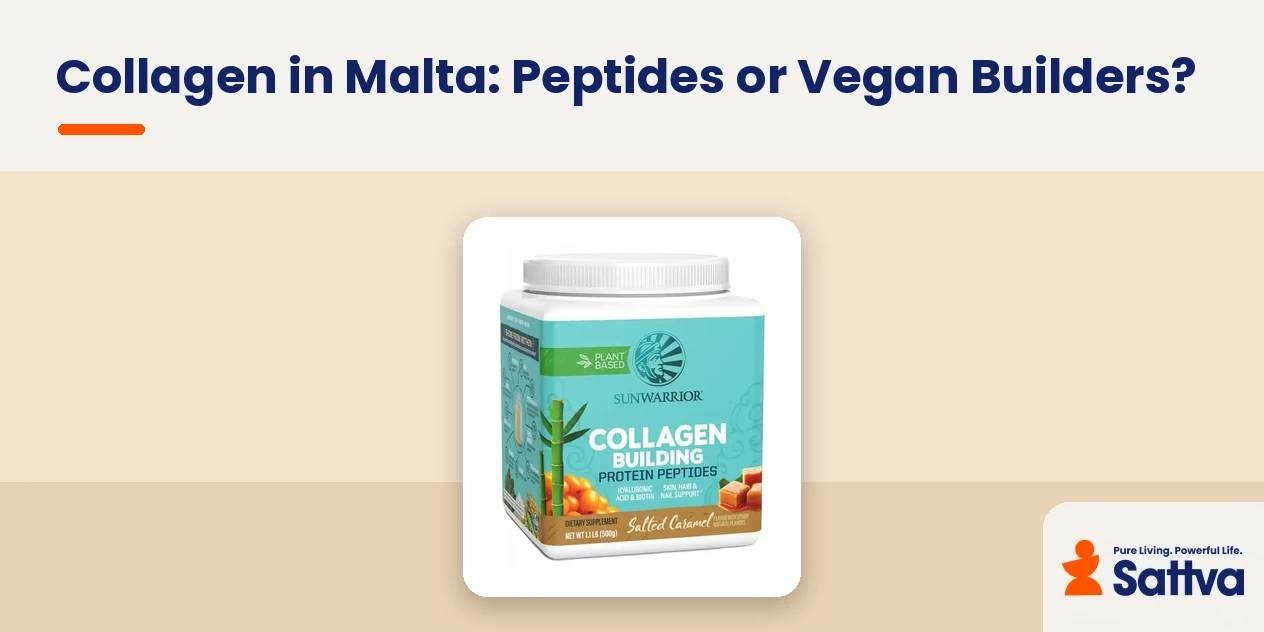
The vegan builder we stock: SunWarrior Collagen Building Protein Peptides
SunWarrior Collagen Building Protein Peptides (500 g) is the clearest example of the builder approach done properly. It’s 100% plant-based and makes no pretence otherwise — the name says “collagen building”, and the formula reads like a checklist of the cofactor logic above:
- Peptide protein base: sprouted, fermented and hydrolysed organic brown rice peptides plus organic fermented pea protein — supplying glycine, proline, arginine and alanine
- Organic vitamin C from amla — the nutrient with the approved collagen-formation claim
- Organic biotin from sesbania — for the maintenance of normal skin and hair
- Hyaluronic acid from a fermented grain source, plus tremella mushroom, bamboo silica, spirulina, kale and spinach
It’s vegan, gluten-free, soy-free, made with organic ingredients, and has no added sugars or synthetic vitamins. One scoop mixes into about 300 ml of water, plant milk or a smoothie.
Four flavours are in stock: Salted Caramel, Chocolate Fudge, Coconut Matcha Latte and Coffee (the Coffee flavour naturally contains caffeine — worth knowing if you train in the evening).
If you want true animal collagen
For anyone who eats animal products and wants collagen itself, these are the formats we carry:
Unflavoured hydrolysed peptides. Igennus Pure & Essential Hydrolysed Collagen Peptides is the minimalist option — a plain peptide powder that disappears into coffee, porridge or smoothies. If you want one tub that does everything with no flavourings, start here. (Igennus also makes a Vegan Pro-Collagen powder if you prefer their take on the builder approach.)
Beauty-focused blends. Planet Paleo Beauty Collagen pairs collagen with skin-and-hair cofactors, and Natures Aid Collagen Beauty Formula offers the same idea in tablet form. Prefer a ready-to-drink? Natures Aid Collagen Liquid comes in a strawberry-and-lime format with 30 servings per bottle.
Food-first and indulgent formats. Planet Paleo Organic Bone Broth Collagen suits anyone who’d rather sip a savoury broth than shake up a sweet drink, and Planet Paleo Cacao Collagen turns the daily serving into a hot chocolate.
Browse the full range in our Protein & Collagen category.
How to read a collagen label in 30 seconds
- Source first. Bovine, marine, bone broth — or plant-based builder. This is the biggest fork in the road, and it’s a values question (diet, allergies) as much as anything.
- Peptides or not. “Hydrolysed” or “peptides” means easy mixing and digestion. Intact collagen (e.g. in some broths) behaves more like food.
- Grams per serving. Collagen powders vary widely — check the serving size and how many servings the tub actually holds.
- What else is in there. Vitamin C is a logical partner. Long flavouring and sweetener lists are worth a second look, especially if you’ll take it daily.
- Claims check. Approved nutrient claims (like vitamin C’s) are specific and modest. Sweeping promises are a red flag, whatever the source.
How people use it
Most collagen and builder powders slot into an existing habit rather than adding a new one: stirred into morning coffee (unflavoured peptides), blended into a post-training shake, or whisked into warm plant milk in the evening (the cacao and matcha formats shine here). Consistency matters more than timing — pick the format you’ll actually enjoy daily.
FAQ
Is vegan collagen real collagen? No — and reputable brands don’t claim it is. Vegan products are collagen builders: protein plus cofactors like vitamin C, which contributes to normal collagen formation. If you’re vegan, that’s the honest option; if you’re not, you can choose either route.
Bovine or marine — does it matter? Both are typically hydrolysed into peptides. The practical differences are dietary (marine suits pescatarians; check fish allergies) and type profile (marine is mostly type I). Choose by your diet and how the product fits your routine.
Can I mix collagen into hot drinks? Hydrolysed peptides dissolve well in hot coffee or tea — it’s one of the most popular ways to take them. Builders with live flavours (matcha, cacao) are usually designed for warm or cold mixing too.
Which one should I start with? If you want simplicity: unflavoured hydrolysed peptides. If you’re plant-based: the SunWarrior builder. If you’d rather drink than think: a flavoured liquid or cacao format.
Delivery across Malta and Gozo
Every product above is stocked locally and delivered across Malta and Gozo — €6 flat rate, free on orders over €40 — or collect from our St Paul’s Bay collection point by appointment. No international shipping, no customs surprises.
This article is for general information and label education only. It is not medical advice. Food supplements are not a substitute for a varied, balanced diet and a healthy lifestyle. If you are pregnant, breastfeeding, taking medication or managing a health condition, speak to your doctor or pharmacist before adding any supplement.