
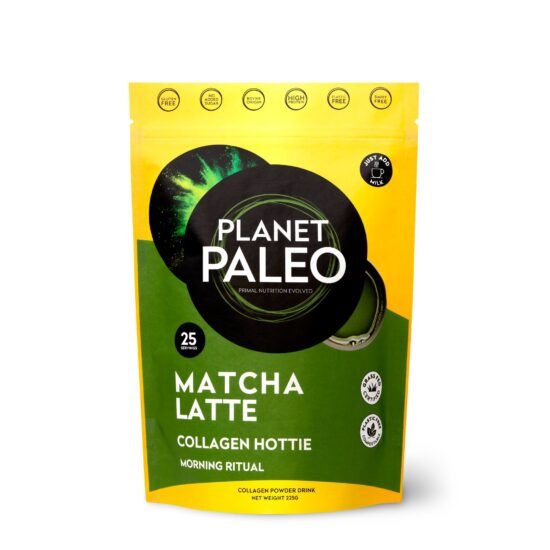
Planet Paleo’s Collagen Matcha Latte is the morning counterpart to their golden-milk evening: premium-grade organic matcha whisked into clean, grass-fed collagen with coconut milk and a hint of spice — a creamy green latte that starts the day with protein instead of promises. 225 g, around 25 servings, 56% collagen by weight.
Two traditions in one tin
Matcha brings the Japanese tea ceremony’s stone-ground green leaf — the gentle, sustained lift that made it the thinking person’s morning caffeine. Collagen brings the ancestral-kitchen tradition of slow-simmered protein, here as easily dissolved grass-fed bovine hydrolysate, rich in amino acids. The coconut milk, cinnamon, lemon peel and vanilla exist to make the marriage taste like a café order rather than a compromise.
On the label
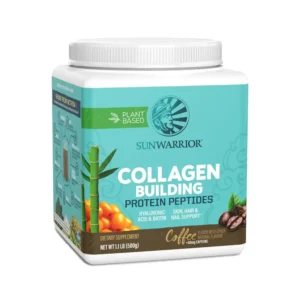
Grass-fed bovine collagen hydrolysate (56%), green matcha leaf powder*, coconut milk powder*, cinnamon stick powder*, lemon peel powder, vanilla pod powder* — asterisks marking certified organic ingredients. Free from dairy, gluten, wheat, soya and sugar; high protein and paleo-friendly. Being bovine collagen, it is not vegetarian — the vegan lane is SunWarrior’s Coconut Matcha peptides, and choosing between the two philosophies is half the fun of the collagen shelf.
Building the cup
Whisk one 9 g serving (roughly 4.5 level teaspoons) into 200 ml of hot — not boiling — water, or into heated milk for the full café treatment. Iced version: shake hard with cold milk and pour over ice; the coconut fraction froths agreeably either way. It also blends into smoothies for the mornings when even whisking feels ambitious.
Who starts the day here
Coffee-weary professionals migrating to matcha’s smoother curve; paleo households who already buy collagen and would rather it tasted of something; and routine-builders who know the oldest truth in supplements — the protein you’ll actually take daily is the one hiding inside a drink you already wanted. At 25 servings a tin, one purchase settles a month of mornings.
Frequently asked questions
How much caffeine? Matcha’s moderate, slow-release share — noticeably gentler than coffee, still best kept before mid-afternoon.
Does it clump? Whisk or froth into warm liquid and it behaves; matcha has demanded whisks for five hundred years and sees no reason to stop.
Sweetened? No sugar — the vanilla and coconut carry the impression honestly.
Matcha grade, decoded
“Premium-grade” matters more in matcha than in most ingredients because the leaf is consumed whole — you drink the powder, not an infusion of it. Better grades mean younger leaves, brighter colour and a smoother, less bitter cup, which decides whether a daily habit survives. Blended with collagen and coconut milk as it is here, the matcha needs to stand up without turning harsh, and this one does — the cup reads green and fresh rather than grassy-bitter, even made with plain hot water on a rushed Tuesday. If your only matcha memories are of bitter café disappointments, a properly graded blend is the correction.
Water or milk? Water for the clean, tea-forward cup; warmed oat or coconut milk when you want the full latte — the tin happily serves both moods.
Ceremony-grade whisking required? No — a €10 milk frother produces a cup the tea masters would forgive; the ceremony is optional, the froth is not.
What separates this from café matcha lattes? The café version is milk, syrup and hope; this one is 56% collagen with the matcha and coconut doing honest flavour work, no syrup pump in sight.
Storage tips? Lid tight, cupboard cool, spoon dry — matcha fades in light and moisture, so treat the tin like the good tea it contains.
Delivery in Malta & Gozo
€6 delivery, free over €40 across Malta and Gozo, or collection from St Paul’s Bay.