

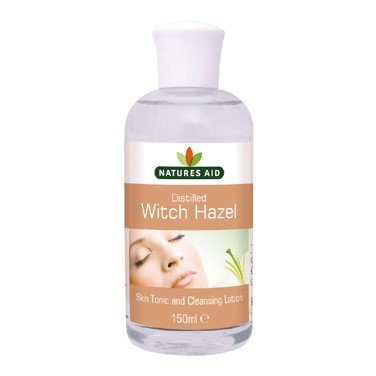
Natures Aid Witch Hazel 150ml bottles one of the great survivors of the traditional medicine cabinet. This natures aid witch hazel is the classic distilled extract of Hamamelis virginiana — the winter-flowering North American shrub whose bark and twigs Native American communities were preparing long before European settlers arrived, learned the recipe, and made witch hazel water one of the most widely kept household staples of the nineteenth and twentieth centuries.
Why natures aid witch hazel endures
Witch hazel’s reputation rests on its gentle astringency — the naturally occurring tannins in the distillate give skin a clean, toned, tightened feel that no other traditional botanical delivers quite the same way. It became the barber’s splash, the sportsman’s rub and the dressing-table toner all at once, and modern skincare has circled straight back to it as a straightforward alternative to complicated formulas.
Key features
- Classic distilled witch hazel in a practical 150ml bottle
- Naturally astringent tannins tone and refresh skin
- Traditional multi-purpose staple for face and body
- Light, clean character with no heavy fragrance
- Trusted Natures Aid quality at an everyday price
How to use
Sweep over cleansed skin with a cotton pad as a toning step, morning and evening, paying attention to areas that feel oily or need refreshing. It also serves as a cooling compress splash and a classic after-grooming rub. Avoid the eye area, and patch test as with any new skincare.
Discover more traditional essentials in our beauty and personal care range at Sattva Health Shop, or learn about the brand on the official Natures Aid website.
The plant behind the bottle is a curiosity in its own right. Witch hazel blooms in the dead of winter, its spidery yellow flowers opening on bare branches when nothing else dares — and its name owes nothing to witches, deriving instead from the Old English wych, meaning bendable, for the shrub’s pliant twigs that dowsers once favoured. American settlers learned the distillation from Mohegan and other indigenous practices, and by the 1860s commercial witch hazel waters were selling in quantities most modern skincare brands would envy. The bottle in your bathroom is, quite literally, one of the oldest mass-market skincare products still in continuous use.
Modern users find the old staple slots into surprisingly current routines. It makes a light pre-moisturiser toning step for combination skin, a gentle scalp refresher between washes, a cooling splash for skin that has been under the Maltese sun, and the classic post-shave or post-wax calm-down that barbers never abandoned. Its light, honest character — no heavy perfume, no film left behind — is precisely what the minimalist skincare movement has been asking formulators to return to. Keep the bottle away from direct heat, use it as generously as the routine wants, and let a century and a half of continuous service argue the rest of the case on its own.
Grandmothers rarely explained their shelf staples; they simply refilled them, decade after decade, and this bottle explains exactly why the habit never needed defending in the first place.
Delivered across Malta and Gozo
Order Natures Aid Witch Hazel from Sattva Health Shop for prompt delivery anywhere in Malta and Gozo. Shop online today and put the old faithful back on the shelf where it belongs.

Reviews
There are no reviews yet.