

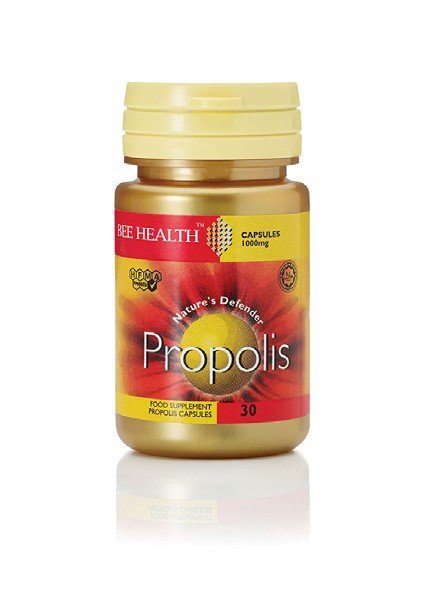
Bee Health Propolis Capsules 30 Pack take one of the hive’s most fascinating substances and make it as easy as swallowing a capsule with breakfast. Propolis is the resinous material bees gather from tree buds and bark, which they use to seal, line and maintain the structure of the hive itself — the colony’s own building putty.
What propolis actually is
Watch a hive closely and you will see workers returning with sticky bundles of resin on their hind legs. Blended with beeswax and enzymes, this becomes propolis, and bees apply it to every joint and surface of their home. Humans have collected it for centuries, and it remains one of the most studied materials to come out of the beehive.
Its taste, however, is famously intense — resinous, bitter and lingering. Capsules exist for precisely that reason.
Why buy from a propolis specialist
Bee Health is a UK company that has built its entire reputation around propolis, rather than treating it as a sideline. That focus shows in consistent sourcing and careful processing from raw resin to finished capsule. You can learn more about the company’s work on the official Bee Health website.
- Propolis in a simple, taste-free capsule format
- Made by the UK’s dedicated propolis specialist
- Handy 30-capsule pack, ideal for first-time buyers
- Slots easily into an existing daily routine
- No spoons, droppers or sticky residue involved
Who the propolis capsules 30 pack suits
This propolis capsules 30 pack is the natural entry point: a month-scale supply that lets you make propolis part of the routine without committing to a larger tub. It suits busy people who take their daily bits and pieces in one quick round at breakfast, and anyone who has tried liquid propolis and decided the flavour was not for them.
Households already using Bee Health’s lozenges or throat spray often add the capsules as their everyday format, keeping the others for out and about.
Simple to take, simple to store
Take with water alongside food, at whatever time of day you will actually remember — consistency beats clock-watching. Keep the pack somewhere cool and dry with the lid closed; a kitchen cupboard away from the hob is ideal.
As with any bee-derived product, those with an allergy to bee products should steer clear, and anyone pregnant, breastfeeding or on medication should have a word with a pharmacist first.
Ordering your propolis capsules 30 pack in Malta
Sattva Health Shop delivers Bee Health products across Malta and Gozo, with free delivery on orders over €40. The propolis capsules 30 pack is small enough to slip into any parcel, so it pairs well with the rest of your usual order.
If you would like to explore the wider world of the hive — lozenges, liquids, sprays and pollen — browse our full supplements range at Sattva. And if you are simply propolis-curious, this 30-capsule pack remains the easiest first step we know.
Propolis itself deserves a word. Bees make it by blending tree resins with beeswax, then use it to line and protect the hive – the name comes from the Greek for ‘in defence of the city’. It is one of the most studied substances in the beekeeping world, and its complex mix of naturally occurring flavonoids is what draws people to it as a daily supplement. Each of these propolis capsules 30 pack delivers a concentrated measure of that resin in a form that asks nothing of your routine beyond a glass of water.
Bee Health sources and standardises its propolis carefully, batch after batch, which matters because raw propolis varies enormously by region and season. The one-a-day format makes the 30-capsule pot a tidy monthly rhythm, and at this price it is one of the easiest additions to any Sattva order. Store the pot somewhere cool and dry, and pair it with the brand’s liquid or lozenges if you prefer variety across the day.

Reviews
There are no reviews yet.