
Vitamin D3 with K2 in Malta: An Autumn Buying Guide (2026)

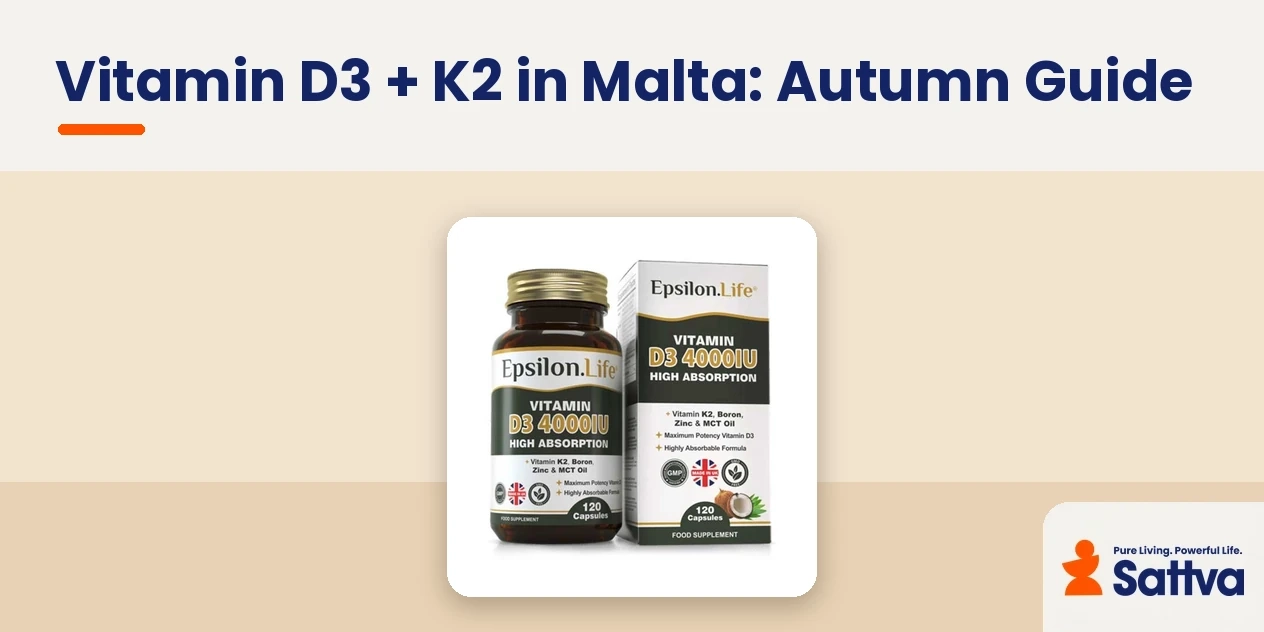
Even on a sunny island, autumn is when vitamin D moves to the top of Malta’s supplement searches. Shorter days, more time indoors and sunscreen the rest of the year all add up — and vitamin D is one of the few nutrients with EU-authorised label claims behind it: vitamin D contributes to the maintenance of normal bones and muscle function and to the normal function of the immune system. This guide explains why modern formulas pair D3 with K2, what the numbers on the label mean, and which locally stocked option at Sattva Health Shop puts it all in one capsule.
As always: no medical claims here beyond the authorised wording above — just what’s in the capsule, in what form and dose, and how to compare.
D3 or D2? Start with the form
Vitamin D supplements come as D2 (ergocalciferol) or D3 (cholecalciferol). D3 is the form your skin makes in sunlight and the one most supplements now use — if the label just says “vitamin D”, check the ingredients list for which form is actually inside.
Why K2 appears next to D3
Vitamin D contributes to normal absorption and utilisation of calcium; vitamin K contributes to the maintenance of normal bones and to normal blood clotting (both EU-authorised claims). That complementary role is why so many modern formulas combine the two rather than selling D3 alone. On the label, look for which form of K2 is used — MK-7 is the form most combination products choose — and its dose in micrograms.
Reading the numbers: IU vs micrograms
Vitamin D doses appear in two units, and labels love to mix them: 1000 IU equals 25 µg. A “high strength” badge means nothing until you’ve converted the units and compared the actual dose per capsule — and checked whether that dose is per one capsule or per two.
The absorption detail most labels skip
Vitamin D and K are fat-soluble, which is why directions usually say “take with food”. Better formulas don’t leave it to chance and include a fat source in the capsule itself, such as MCT oil.
Our stocked pick: Epsilon Life D3 with K2, zinc, boron and MCT oil
Epsilon Life Vitamin D3 with K2 covers every point above in one capsule: D3 as cholecalciferol, K2, zinc (which contributes to the normal function of the immune system — another EU-authorised claim) and boron, carried in MCT oil for the fat-solubility question, with every dose stated plainly on the label. At 120 capsules per pot, one purchase comfortably covers the autumn and winter months.
What pairs well with it
Many customers build a simple autumn base around three staples: D3 with K2, magnesium glycinate and an omega-3 from the omegas and essential fats range — where you’ll also find cod liver oil, the traditional food-based source of vitamins A and D. If you’d rather browse by goal, start from our goals categories.
Buying vitamin D3 and K2 in Malta: the practical part
Delivery: orders ship across Malta and Gozo for €6, free on orders over €40, typically within 1–3 working days — or collect from St Paul’s Bay by appointment.
Labels before you buy: every product page lists the exact forms and doses, so you can do the IU-to-microgram comparison before anything arrives.
Not sure where to start? See what other Malta customers pick in our best sellers.
FAQ
Do I need vitamin D in Malta if it’s sunny? Sunshine only makes vitamin D when skin is actually exposed — office hours, sunscreen and the shorter days from October onwards are why vitamin D remains Malta’s most bought vitamin. Whether you personally need a supplement is a question for your doctor or pharmacist, who may suggest a blood test.
Why do supplements combine D3 with K2 instead of selling D3 alone? Because the two have complementary EU-authorised roles around calcium and normal bones — combination formulas simply put the pair in one capsule at stated doses.
How much vitamin D is in 1000 IU? 25 micrograms. Always convert to one unit before comparing two products.
Should I talk to a professional first? If you take medication — particularly anticoagulants, which vitamin K can interact with — are pregnant, or have a health condition, speak with your doctor or pharmacist first. Supplements are not a substitute for a varied diet.