
Black Seed Oil in Malta: What Cold-Pressed Really Means (2026 Guide)

Black Seed Oil in Malta: What Cold-Pressed Really Means
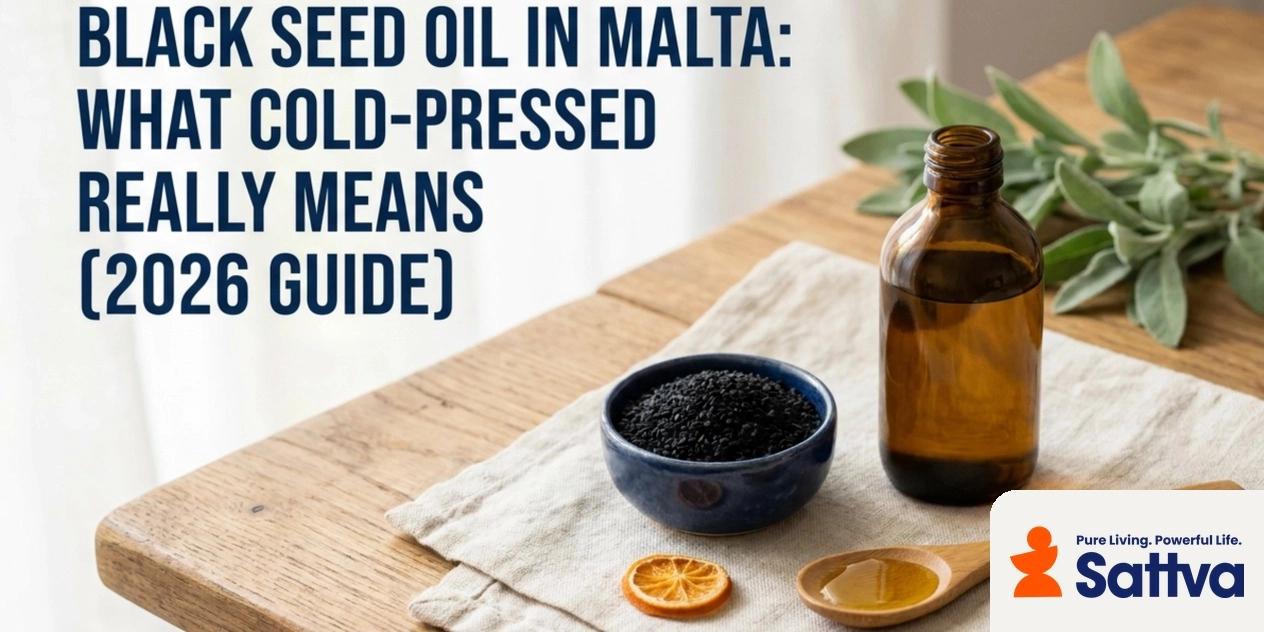
Black seed oil has quietly become one of the most asked-about bottles in the shop — an oil with over a thousand years of continuous use across Middle Eastern, North African and South Asian food traditions, now firmly back in fashion. It is also a product where labels vary enormously in quality. This guide explains what black seed oil actually is, the label checks that separate a good bottle from a cheap one, and what’s stocked locally at Sattva Health Shop with delivery across Malta and Gozo.
First, what is it?
Black seed oil is pressed from the seeds of Nigella sativa — black cumin, the tiny jet-black seed you may know scattered across flatbreads and naan. Despite the lookalike names, it is not black sesame and not onion seed; Nigella sativa is its own plant, with its own distinctly peppery, herbal character.
We don’t make health claims about it, and a good label shouldn’t either. What we can tell you is what’s in the bottle, how it was made, and how people traditionally use it — which is exactly what to compare when you’re buying.
The label checks that matter
- Cold-pressed — heat squeezes more oil from a seed but degrades the character of what made the oil interesting. Cold pressing keeps the temperature low so the oil keeps the nutrients, flavour and aroma of the ripe seed.
- Virgin, first pressing — one extraction, no solvents, no refining, no second passes.
- A one-line ingredient list — the whole label should read something like “100% organic cold-pressed black cumin seed oil”. Nothing else.
- Organic certification — for a concentrated seed oil taken by the spoon, knowing the seeds were grown without synthetic pesticides is worth the certification.
- A dark, well-sealed bottle — cold-pressed oils are delicate and repay protection from light.
What we stock in Malta
Mattisson Organic Black Seed Oil 250 ml passes every check above: organic, virgin, first-pressing, cold-pressed from unheated ripe black cumin seeds in the Netherlands, with a single-line ingredient list. At a teaspoon a day, a 250 ml bottle lasts roughly seven weeks.
It sits in our oils and healthy fats range alongside other traditional single-ingredient oils — Anae organic castor oil 300 ml and Natures Aid cod liver oil among them.
How people use it
- The traditional teaspoon — taken neat, or chased with honey or juice. The flavour is assertive: peppery and herbal, closer to oregano-meets-cumin than to any neutral oil.
- As a finishing oil — drizzled over hummus, labneh, salads, roast vegetables or soups.
- In dressings — blended with lemon and olive oil for a Middle Eastern edge.
- Never for frying — heat undoes the cold-pressing’s work. Add it after cooking.
Storing it well
Keep the bottle cool and dark (a Malta summer argues for the fridge), shake before use, and cap it tightly. A cold-pressed oil stored carelessly loses its character long before its date.
Buying black seed oil in Malta
Our black seed oil ships from local stock across Malta and Gozo for €6, free on orders over €40, usually within 1–3 working days — or collect from St Paul’s Bay by appointment. The product page shows the full label, so you can run the checks above before ordering. Related reading: our top supplements in Malta guide.
FAQ
What does black seed oil taste like? Peppery, herbal and bold. Honey is the classic accompaniment for the daily-teaspoon crowd; regulars come to like the bite on its own.
Is black seed the same as black sesame or onion seed? No. Nigella sativa is its own plant — the lookalike seeds are unrelated.
Can I cook with it? Use it cold or as a finishing oil. Frying defeats the point of cold pressing.
Can I use it on skin or hair? The oil has a long history of external use in its home traditions. Patch-test first, as with any potent plant oil, and keep a kitchen bottle and a bathroom bottle separate for simple hygiene.
Should I check with anyone before taking it daily? As with any concentrated food: if you are pregnant, breastfeeding, on medication or have a health condition, have a word with your doctor or pharmacist first. Supplements and traditional oils are not a substitute for a varied diet.