
Menstrual Cups in Malta: Sizes, Material and How to Choose (2026 Guide)

Menstrual Cups in Malta: Sizes, Material and How to Choose
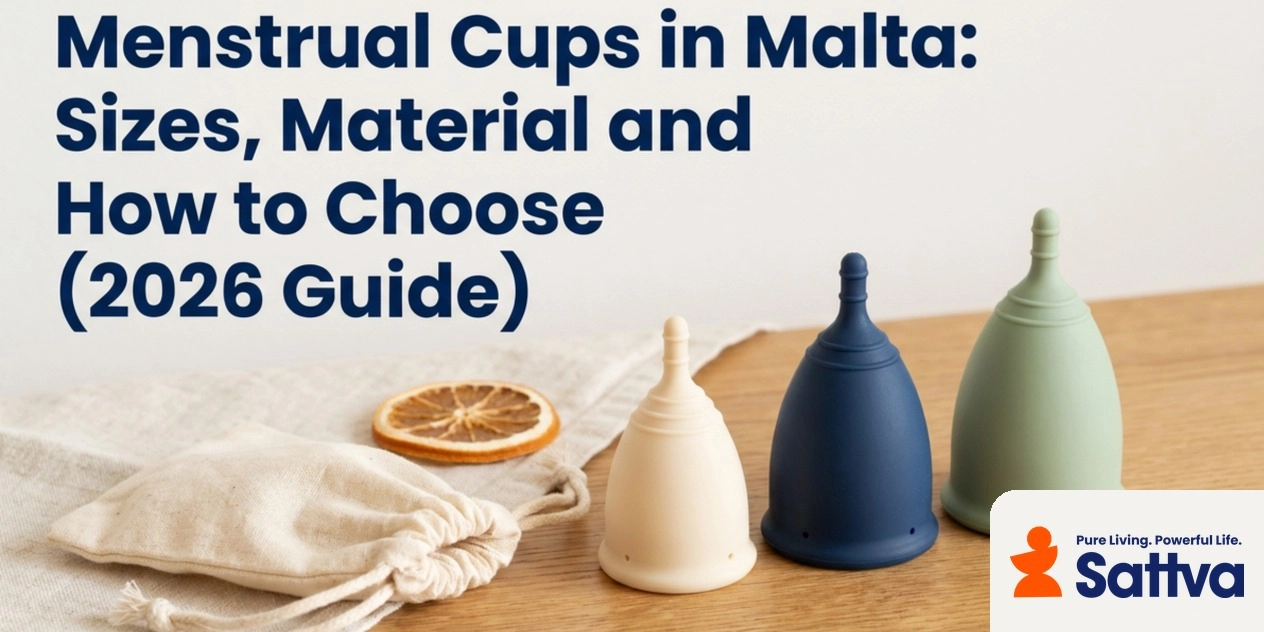
A menstrual cup is one purchase that quietly replaces years of disposables — one reusable cup instead of a monthly box of tampons or pads, less plastic in the bin, and less to remember on the shopping list. Availability in Malta used to be the sticking point; that’s no longer the case. This guide covers how cups work, what the material label should say, how the sizes differ, and what’s stocked locally at Sattva Health Shop with delivery across Malta and Gozo.
How a cup works
A menstrual cup is a small, flexible cup worn internally during your period. Instead of absorbing like a tampon, it collects — you empty it, rinse it, and reinsert. One cup, used and cared for properly, replaces disposable products cycle after cycle, which is why cups have become the standard recommendation of the zero-waste movement.
The label check: material first
The material line is the one to read before anything else. The standard for reusable cups is medical-grade silicone — the same class of material used for medical devices — soft, flexible and easy to keep clean. The cups we stock are made in France from medical-grade silicone, and each comes with instructions and an organic cotton storage pouch. As with supplements, a good product tells you exactly what it’s made of and where; treat vague material descriptions as a reason to shop elsewhere.
Choosing a size
Cup sizing is about capacity and fit, and the maker’s guidance is the place to start. The Anae range we stock comes in three sizes, all €24:
- Size S — 16 ml — the smallest capacity, suggested for younger users and lighter flows.
- Size M — 21 ml — the all-rounder for a typical flow; if in doubt between sizes, M is the usual starting point.
- Size L — 28 ml — the largest capacity, suggested for heavier flows and new mothers.
Each cup has a flower-shaped stem for easier removal, and each product page lists the full specification so you can compare before ordering. If you’re unsure which size suits your body — for example after childbirth, or if you have any gynaecological condition — your doctor, gynaecologist or pharmacist is the right person to ask.
Looking after a cup
Follow the instructions included with the cup — they cover cleaning during your cycle and how to sanitise the cup between cycles. Two general habits serve every cup owner well: empty and rinse it regularly rather than pushing its capacity, and store it in its breathable cotton pouch rather than an airtight container.
Why people switch
- Less waste — one reusable cup instead of a steady stream of disposables; cups are a natural fit for our plastic-lite range.
- Economical — a €24 cup, cared for properly, outlasts many months of disposable purchases.
- Less to carry and less to run out of — one cup covers the whole cycle; no 11pm pharmacy runs.
Buying a menstrual cup in Malta
All three sizes ship discreetly from local stock across Malta and Gozo for €6, free on orders over €40, usually within 1–3 working days — or collect from St Paul’s Bay by appointment. The cups live in our body care range alongside the rest of our non-toxic personal care selection.
FAQ
Which size should I start with? The maker suggests S for younger users and lighter flows, M as the all-rounder, and L for heavier flows and new mothers. When in doubt, M is the usual first cup — and if you have any doubts specific to your body, ask your doctor or gynaecologist.
What is the cup made of? Medical-grade silicone, made in France, with an organic cotton storage pouch included.
How do I clean it? Follow the included instructions: rinsing during the cycle, and a proper sanitising routine between cycles. The instructions that come in the box are specific to the cup, so they beat any general advice.
Is there a learning curve? Most new users take a cycle or two to get comfortable with insertion and removal — that’s normal. The included instructions cover technique, and the flower stem is designed to make removal easier.