

Magnesium has quietly become one of the most bought minerals in Malta — and one of the easiest to buy badly. The same word covers cheap oxide tablets, well-absorbed glycinate capsules, fizzy powders, body sprays and even bath flakes, and the label rarely explains the difference. This guide does: what the forms mean, which format suits which routine, and how to compare products in 30 seconds.
As always at Sattva, we stick to label literacy rather than promises: what’s in the product, in what form and dose, and how to tell one option from another.
What magnesium actually does
Magnesium is one of the few supplement ingredients with specific, EU-approved nutrition claims. Magnesium contributes to a reduction of tiredness and fatigue, to normal muscle function, to normal psychological function, to electrolyte balance, and to the maintenance of normal bones and teeth. That’s the approved wording — anything grander than that on a label is marketing, not regulation.
The form is the first thing to check
“Magnesium” on the front tells you little; the compound in the ingredients list tells you a lot.
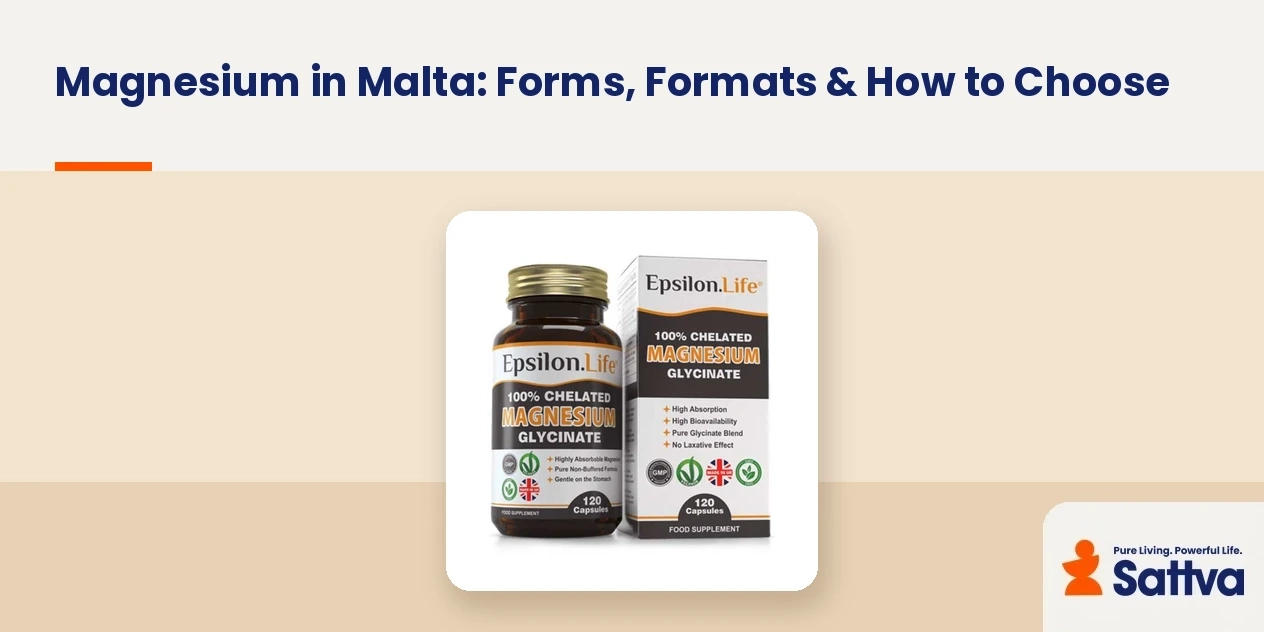
Magnesium glycinate (bisglycinate). Magnesium bound to the amino acid glycine. It’s the form most people choose for evening routines, and it’s typically gentle on the stomach. Epsilon Life chelated magnesium glycinate is our capsule pick — it states the elemental magnesium per capsule, which is the number that actually matters.
Magnesium citrate. Well absorbed and common in powders; often used around training.
Magnesium oxide. The cheapest and most compact form, but poorly absorbed — it’s how a tiny tablet can claim a big dose. If the label only says “magnesium 375 mg” with oxide in the ingredients, you now know why it was inexpensive.
Elemental magnesium. Whatever the form, compare products by elemental magnesium per serving — the amount of actual magnesium, not the weight of the whole compound. Good labels state it plainly.
Pick the format that fits your routine
Capsules — the no-fuss daily option: Epsilon Life magnesium glycinate, 120 capsules.
Powders — stir into water in the evening or after training. BetterYou Magnesium Max Original powder is the straightforward one, and there’s an electrolyte-rich triple magnesium powder that pairs three forms with electrolytes for sweaty Malta summers.
Body sprays and gel — transdermal magnesium you spray onto skin, popular with people who dislike swallowing capsules. The BetterYou magnesium oil body spray is the classic; there are targeted versions for muscles, joints and sleep, plus a sensitive-skin option.
Bath flakes — magnesium chloride for a soak. BetterYou magnesium flakes turn a bath into the most relaxing way to end the day, with Sleep, Muscle and Relax variants in the same range.
Food first — unrefined mineral salts naturally retain magnesium alongside other trace minerals. Browse our mineral salts and seasoning range, or the full vitamins and minerals category.
How to read a magnesium label in 30 seconds
- Find the compound — glycinate, citrate, chloride or oxide — in the ingredients list.
- Find the elemental magnesium per serving, and the % NRV (the EU reference value is 375 mg a day).
- Check the serving size — some products need three capsules to reach the dose on the front.
- Check what else is in there — fillers and sweeteners in powders are worth a look if you’ll take it daily.
FAQ
Glycinate or oxide — does it really matter? Yes: the form changes how much magnesium your body can actually use, and oxide is the weakest of the common forms. It’s the main reason two products with the same front-of-pack dose can be very different value.
Spray or capsules? It’s a routine question, not a right-or-wrong one. Capsules make dosing exact; sprays and bath flakes suit people who prefer to skip pills. Many customers combine a daily capsule with flakes for bath evenings.
When should I take magnesium? There’s no mandated time. Many people take glycinate in the evening and citrate or electrolyte powders around training — pick the slot you’ll stick to, because consistency beats timing.
Can I get magnesium from food? Absolutely — nuts, seeds, legumes, whole grains and leafy greens are the classic sources, and supplements are meant to top up a varied diet, not replace it.
Delivery across Malta and Gozo
Every product above is stocked locally and delivered across Malta and Gozo — €6 flat rate, free on orders over €40, usually within 1–3 working days — or collect from our St Paul’s Bay collection point by appointment.
This article is for general information and label education only. It is not medical advice. Food supplements are not a substitute for a varied, balanced diet and a healthy lifestyle. If you are pregnant, breastfeeding, taking medication or managing a health condition, speak to your doctor or pharmacist before adding any supplement.